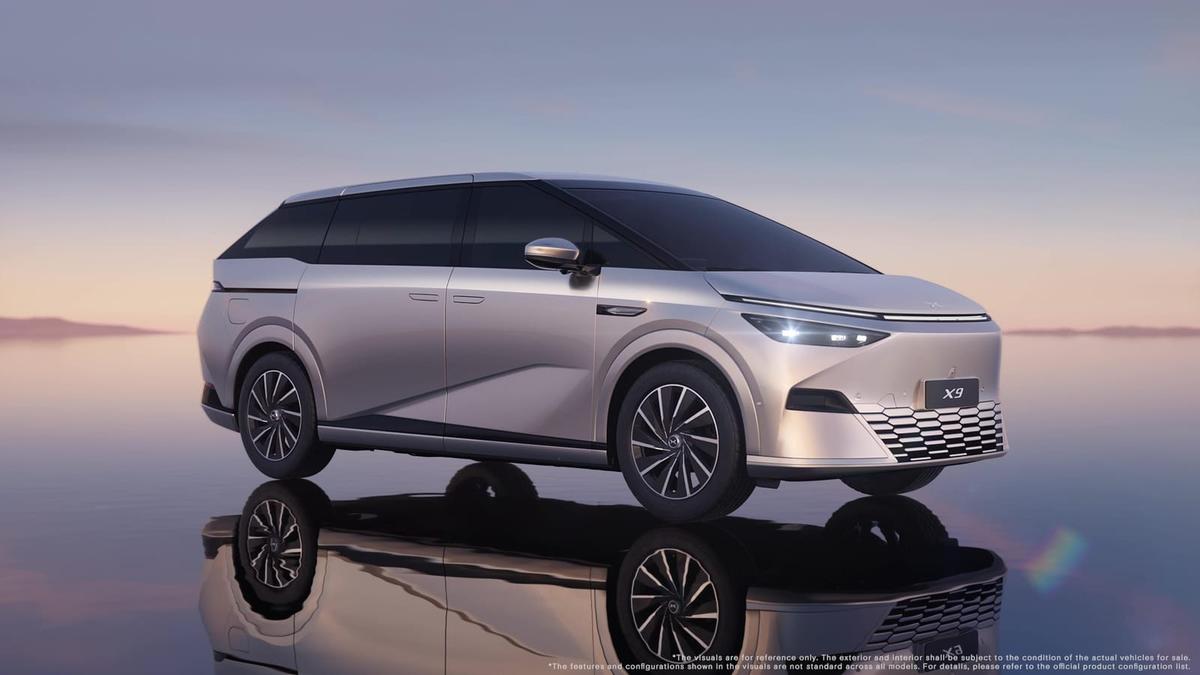
XPeng AI Day 2026: smarter slowing in traffic, a robot in the showroom and NGP in 2027. So what reaches Israel?
 Ron Alon · Published · Updated · 12 min read
12.4% more range in urban stop-and-go traffic. That is the most tangible number to come out of XPeng's eighth AI Day, held on November 25, 2026 in Guangzhou at 14:00 Beijing time (08:00 in Israel). The rest of the event went to a humanoid robot, a driverless taxi, a flying car and a term XPeng has been trying to make its own for a year now, "physical AI". We did not watch from the hall. What follows is based on the official press release XPeng distributed through GlobeNewswire and on CnEVPost's report from the same day, and I am careful to say each time where a detail comes from. The difference matters, because some of the details that concern buyers most, such as a paid subscription, appear only in CnEVPost's report.
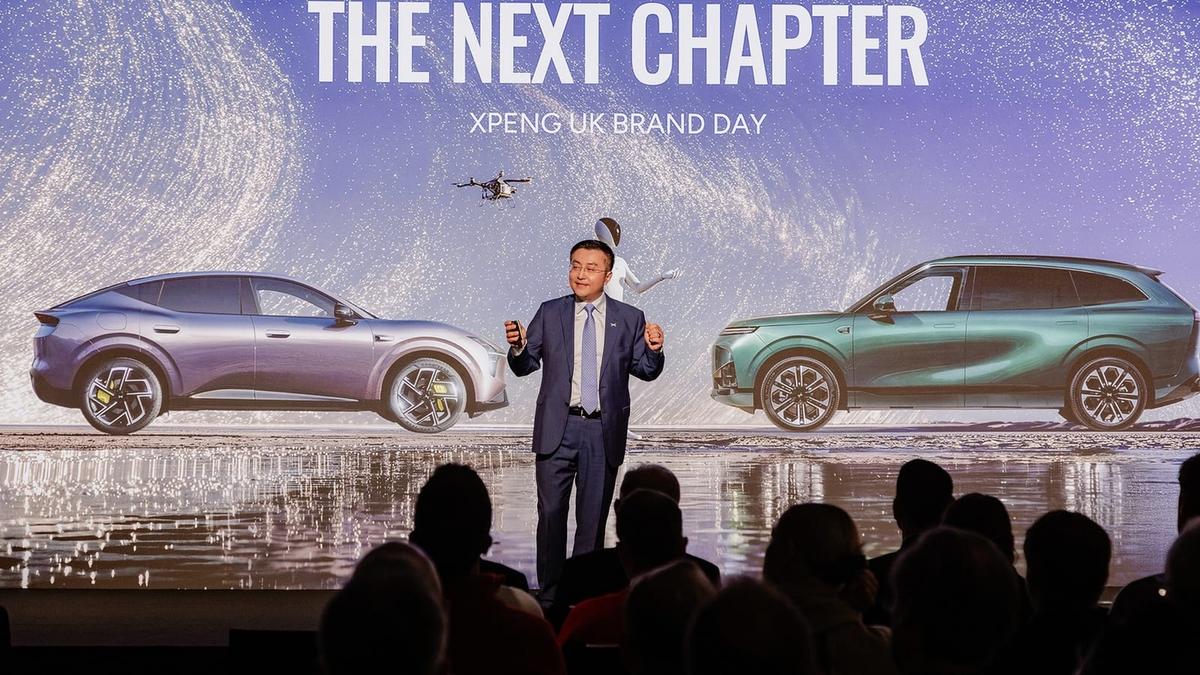
In the article
Six days ago, in the release inviting journalists, XPeng stuck to a general promise.
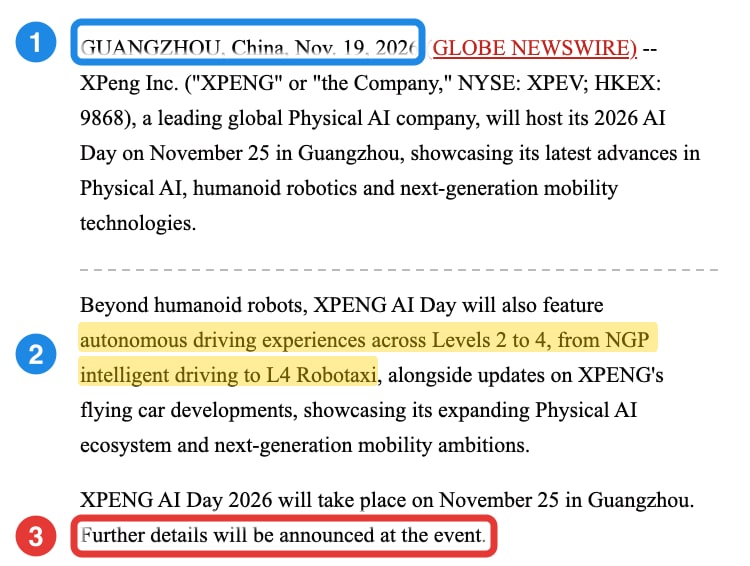
The dateline in blue (1) reads Guangzhou, November 19. In yellow (2), what drivers were promised: hands-on experience of assisted driving, from NGP, XPeng's urban driver assistance system, up to a Level 4 robotaxi. And in red (3), the line that made us write cautiously before the event: "more details will be revealed at the event". Now the details are here. Most of them will not touch Israel in the coming year, but two or three do.
Three floors of brain, and one marketing word
The headline announcement, according to the official release, is the Turing Physical AI Architecture, which XPeng also calls VLA 3.0. A VLA is a model that turns what the cameras see into driving decisions. The new version is built in three layers. At the bottom, System 0 controls the body itself, whether that is a car or a robot. Above it, System 1 handles real-time response and runs on VLA 2.0, the model already in cars in China. And at the top, System 2 plans tasks, with a vision-language model and an "agent" layer that decides what to do and in what order.
On paper, this sounds like a structure every company in the field describes one way or another these days. The more interesting part is the claim about speed: according to XPeng, version 6.4.0 of VLA 2.0 trains in a closed loop run by AI agents, 10 to 12 times faster than before, and improves itself without an engineer signing off on every step. That is the company's claim, with no outside measurement. Alongside it came X-VMC 2.0, a system that controls propulsion, braking, steering and suspension together, so the car behaves as a single unit rather than a collection of systems.
The first feature a driver will feel: letting go of the brake in a jam
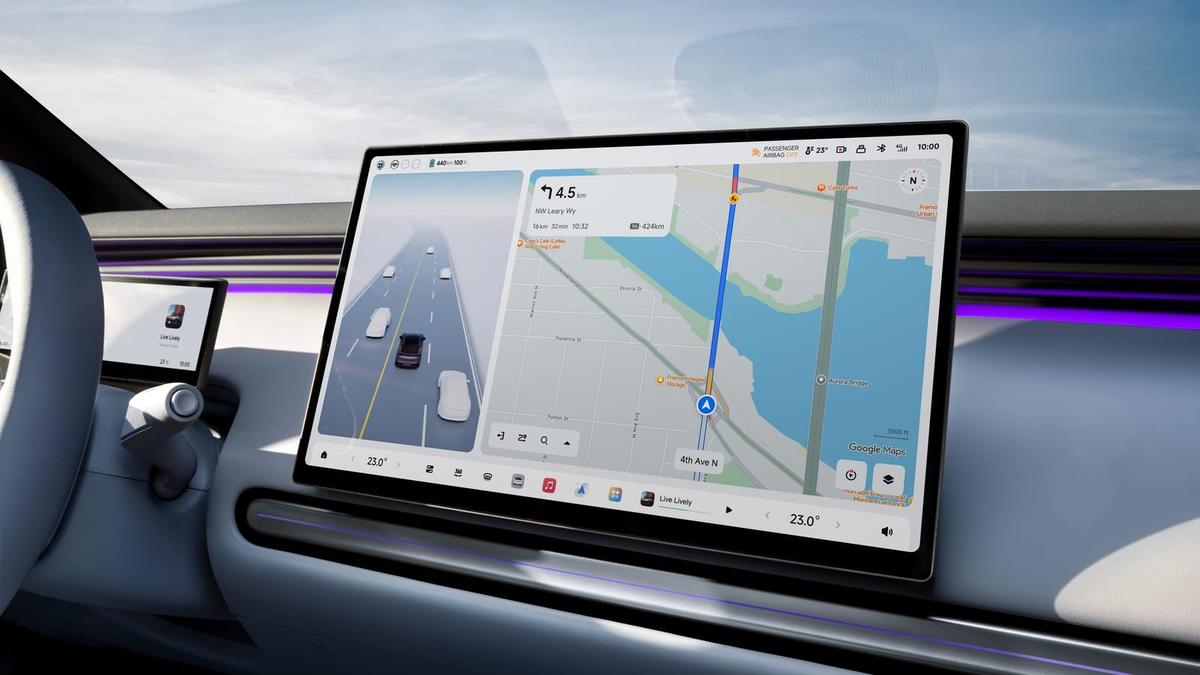
This is where the 12.4% comes in. XPeng launched what it calls Turing AI Co-driving, and its first feature is VLA Adaptive Deceleration. The car reads the traffic ahead and slows down by itself, gently, instead of the driver pressing and releasing the brake again and again. According to the official release, in urban traffic jams this adds 12.4% of range compared with driving with energy recovery switched off, and the update ships over the air in December 2026. CnEVPost adds two details that are not in the release: the first models will be the G9L and the Mona L05, and brake pedal use in jams drops by 95%.
Note the baseline. The 12.4% is measured against energy recovery switched off, not against a driver who already uses strong regeneration or one-pedal driving. Anyone who drives that way today will probably gain less. Not bad, and genuinely useful on the Ayalon at half past seven in the morning, but it is not a figure that will show up on a price list.
Two more items from the official release: a 360-degree active avoidance system called AEX is in development, with no date, and accident claims on XPeng cars in China have fallen by 13.93% since VLA 2.0 hit the road. The last figure is interesting, but it comes from the company itself rather than an insurer, and we were not told what period it is measured against.
NGP: Paris now, the world in 2027, and maybe for a fee
Outside China, the official release is tidy. Local adaptation tests for NGP have been completed in Germany, the Netherlands and France. In November, public test rides with urban NGP opened at the Paris store, as we covered in our piece on Paris. And the first global rollout of NGP is targeted for the first half of 2027. Two days ago, in the Paris announcement, XPeng only wrote "2027". Now there is a half-year. That is a step forward, and like every date in this field, it depends on approvals.
According to CnEVPost, the first deliveries of VLA 2.0 cars outside China are also planned for that half. Then comes the detail most worth remembering: according to the same report, Turing AI smart driving will become a paid subscription for new buyers worldwide from the second quarter of 2027, while those who bought before then keep lifetime access. There is no price, and it is not in the official release. Still, it is a change of model. Until now XPeng presented its software as part of the car, and Tesla was the one charging separately for FSD. In Tesla's Israeli configurator, FSD (Supervised) costs 37,500 ₪ and is marked "not yet available" (checked on 23.11.2026). If CnEVPost's report is right, XPeng is heading in a similar direction, and at least promises not to charge those who have already bought.
One more CnEVPost detail for owners in China: a slimmed-down version, VLA 2.0 Lite, reaches six Max models with two Nvidia Orin-X chips in December (the 2024 P7+ Max, the Mona M03 Max, the 2025 G6, the G7, the G9 and the X9 Max), with the remaining models getting it in the first quarter of 2027. And every model with 5C charging moves to 6C by update, 10% to 80% in 10.7 minutes. Both items are reported for the Chinese market. Neither says anything about cars sold abroad.
IRON: fewer joints, more dates
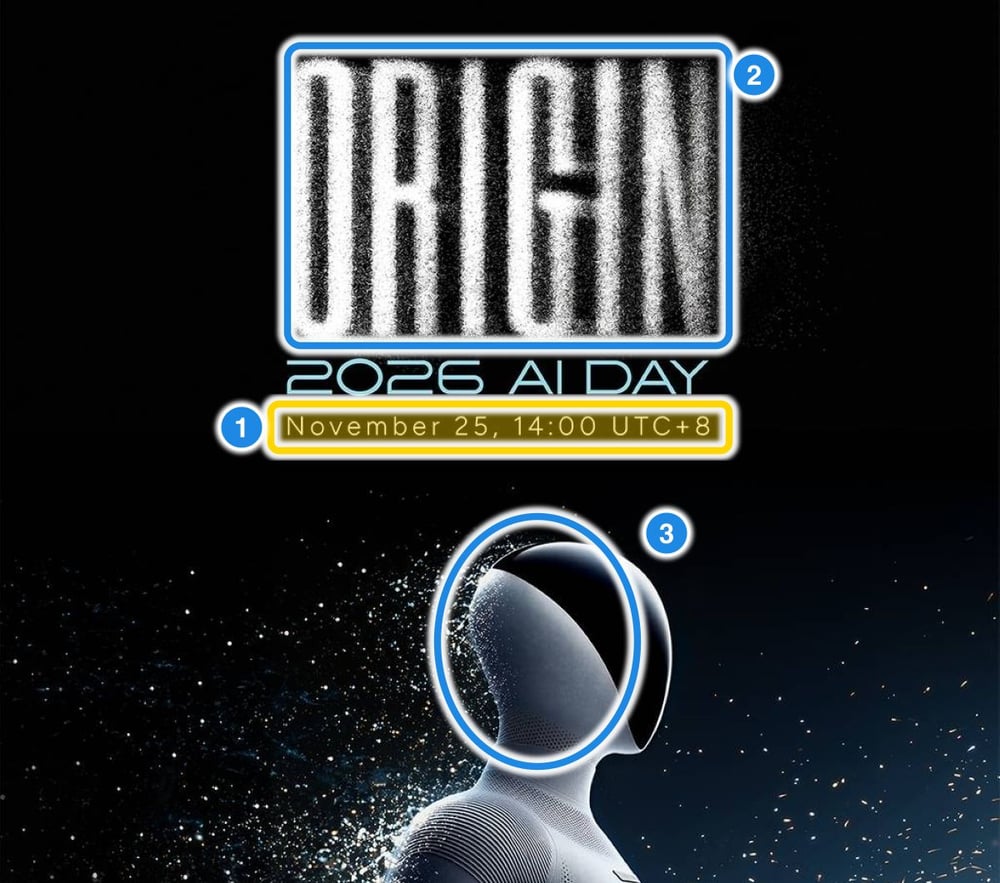
The invitation already hinted at who the star would be. In yellow (1), November 25 at 14:00 UTC+8. In blue (2), the theme ORIGIN, which XPeng explained as exploring "the boundaries of future AI starting from the origin of the physical world". And in the circle (3), IRON, not a car.
The robot did take the stage, in its first public appearance. According to the official release it has 76 degrees of freedom, meaning axes of movement, more than 1,500 tactile points covering over 80% of the key areas of its body, and three Turing chips. In the first quarter of 2027 it will start training as a sales assistant in XPeng stores, and its official public release is targeted for the second quarter of 2027. CnEVPost adds the dimensions, 170 cm and 62 kg, a solid-state battery of more than 300 Wh/kg, an hour and a half of work after a 20-minute charge, and mass production of the hardware in January 2027.
Anyone who follows the company will notice two things. In November 2025 XPeng talked about 82 degrees of freedom, and now it is 76. And Reuters had earlier reported mass production as soon as the fourth quarter of 2026. The schedule has slipped by a quarter and the spec has come down slightly, and neither is a scandal. Tesla's Optimus timelines have moved more than once too. He Xiaopeng himself, according to CnEVPost, said he is "extremely optimistic in the long term and cautious in the short term" about robots. To my mind, that was the most honest sentence said on stage.
Next to the robot, XPeng showed its Robot Data Factory, which trains robots on more than 250 scenarios across 15 job categories, and a production line with more than 600 automated AI quality checks and more than 1,000 tests. That is mostly a message for investors: we are building an industry, not a demo.
The taxi and the flying car: another step on paper
According to the official release, the robotaxi went from testing with a safety driver to driverless road tests in eight months. XPeng has received an L4 demonstration qualification in Guangzhou, has started driverless passenger testing, and plans demonstration operations in selected areas by the end of 2026. In 2027 comes the YOYO-01, a robotaxi designed as a taxi from the start. We gave the background on YOYO in our piece on the driverless taxi.
ARIDGE, XPeng's aviation company, has according to the release received a Type Inspection Authorization for its eVTOL and completed its certification flight tests, and in the UAE it runs a low-altitude regulatory sandbox with partners. It is the direct continuation of what we described in our piece on the handover in Ras Al Khaimah. An inspection authorization is not yet an airworthiness certificate, and there is still no price and no sales date.
So what reaches a driveway in Israel?
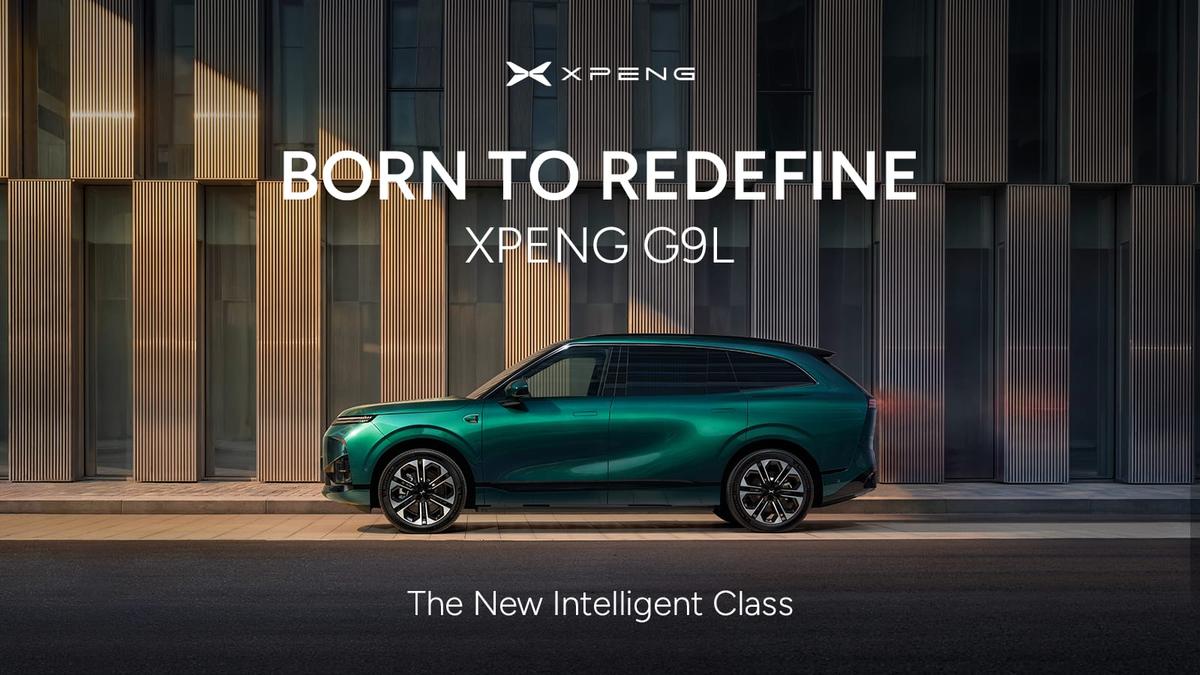
Let's start with what isn't there. None of the announcements has been confirmed for Israel by the importer, and the official release does not mention Israel. According to the Ministry of Transport registry, as of November 23 there are 16,958 XPeng cars in Israel (the live count is here), almost all of them G6, G9, P7, P7+ and X9. On the importer's website they are presented with XPILOT ASSIST, not NGP, and there is no Turing-chip car here at all. The G9L and the Mona L05, the first to get adaptive deceleration according to CnEVPost, are not sold here either. We wrote about both in our piece on the G9L in Europe and our piece on the L05.
So what is worth watching? To my mind, three things.
The first is NGP in Europe in the first half of 2027. Israel relies largely on European type approvals, so a launch in Germany or France is the nearest signal we will get. Even then, as we wrote about Paris, it takes a version with the right hardware and approval from the Ministry of Transport.
The second is the subscription. If CnEVPost's report is right and also applies to Israel, someone buying a new XPeng after the second quarter of 2027 could end up paying separately for smart driving, while earlier buyers keep it. It is not official yet. But anyone signing for a car in the coming months can ask the salesperson, in writing, what software is included and for how long.
The third is the hardware in cars already here. CnEVPost lists the 2025 G6, the G9 and the X9 Max among the Chinese models with two Orin-X chips that will get VLA 2.0 Lite. Are the G6, G9 and X9 sold in Israel built on the same hardware, and will they get such an update at all? No source I read says so, and the importer has published nothing. Past experience is not encouraging: the XOS 5.12 update has not officially arrived here either. We will wait and see, and in the meantime this is a question for the service centre, not a promise.
If you are thinking of buying an XPeng this month, AI Day does not change the maths. The car you get at delivery is what you are buying, and the price list and the current deals are still what counts. And if you want to know whether the company has the money to fund robots and flying cars, its third quarter results give part of the answer.
Sources
- XPeng's official press release, "XPENG Unveils Turing Physical AI Architecture, and Debuts Advanced General-Purpose Humanoid Robot IRON", GlobeNewswire, Guangzhou, 25.11.2026: globenewswire.com/news-release/2026/11/25/3410455/0/en/xpeng-unveils-turing-physical-ai-architecture-and-debuts-advanced-general-purpose-humanoid-robot-iron.html
- CnEVPost's AI Day report, including the subscription, the adaptive deceleration models, IRON's specs and the VLA 2.0 Lite and 6C updates, 25.11.2026: cnevpost.com/2026/11/25/xpeng-ramps-up-physical-ai-push-2026-ai-day
- XPeng's press release ahead of the event, GlobeNewswire, 19.11.2026 (read in the republished version on The Manila Times): globenewswire.com/news-release/2026/11/19/3406923/0/en/xpeng-to-showcase-its-physical-ai-push-at-annual-ai-day-featuring-its-latest-humanoid-robot-in-action.html
- CnEVPost on XPeng's and the CEO's Weibo announcement ahead of the event, 19.11.2026: cnevpost.com/2026/11/19/xpeng-to-hold-2026-ai-day-nov-25
- Private and commercial vehicle registration database, Ministry of Transport (updated 23.11.2026): data.gov.il/he/datasets/ministry_of_transport/private-and-commercial-vehicles
- Tesla Israel's Model Y configurator, checked on 23.11.2026: tesla.com/he_il