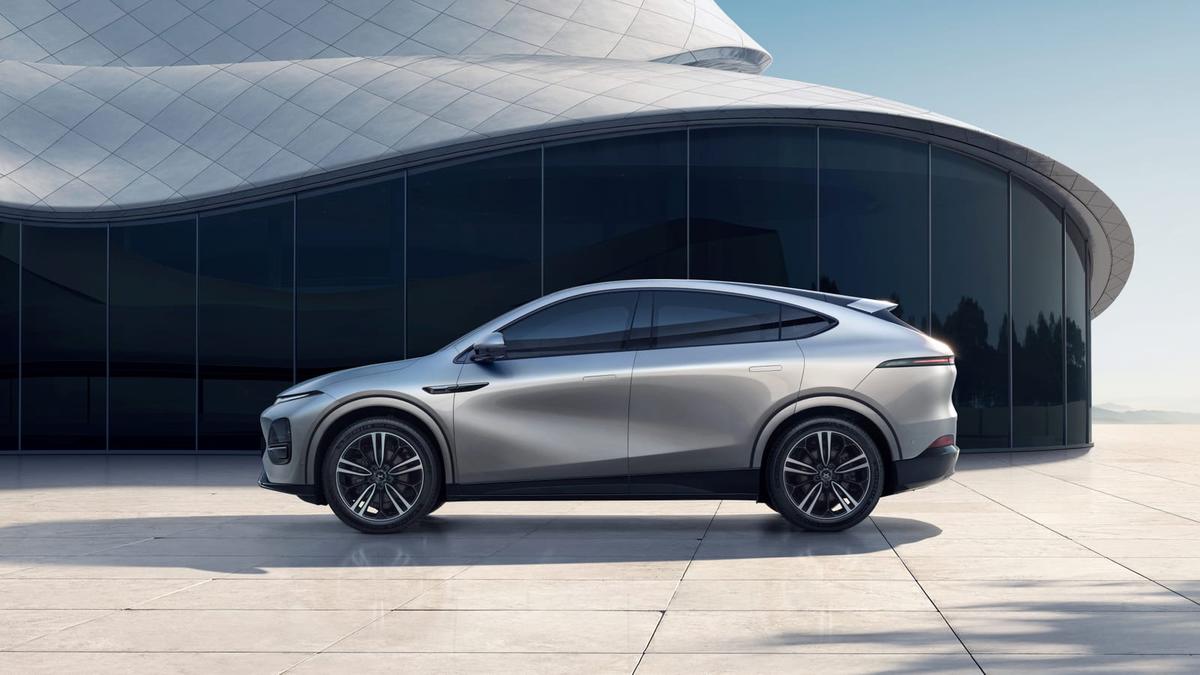
Volkswagen weighs XPeng's "brain" for Europe. What does it mean for an Israeli buyer?
 Ron Alon · Published · Updated · 7 min read
Europe's biggest carmaker is considering building the next electric Golf on a system it co-developed with XPeng. That was the report in German business magazine Manager Magazin on 26 October 2026, and as of 23 November neither Volkswagen nor XPeng has confirmed or denied it. What interests me is not what happens in Wolfsburg, but whether anyone in Israel standing in front of a G6, an Enyaq or a Model Y today has a reason to care.
In the article
In the short term, no. But the story behind the report is more interesting than the headline.
What was actually built in Hefei
A modern EV is largely a computer on wheels. What decides how fast it gets updates, how much it costs to build and how easily driver assistance can be added is its "electronic architecture": the computers, wiring and software that tie everything together. For Volkswagen, that has been the weak spot for years. The group's software company, Cariad, became a byword for delays.
In China, Volkswagen took a different route. In April 2024 it announced it was co-developing an architecture called CEA with XPeng, with engineers working out of its development centre in Hefei.
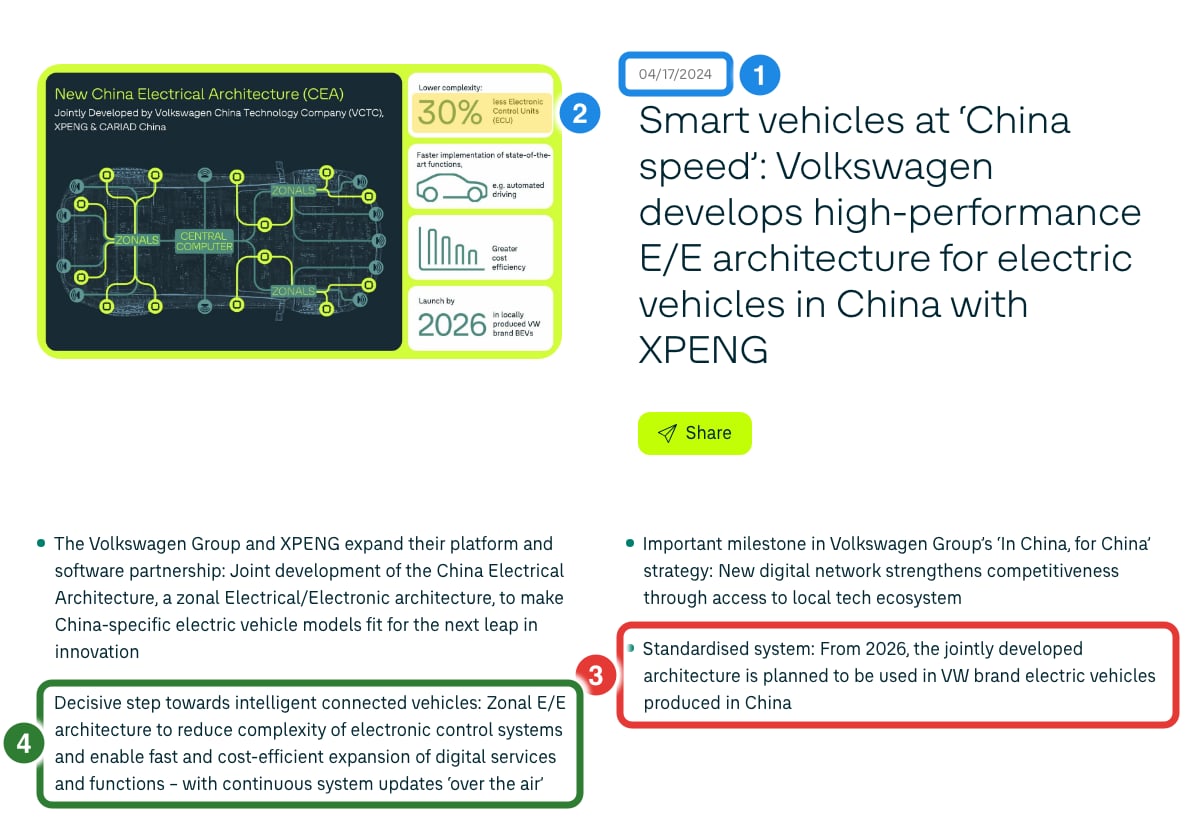
Two things in that release explain today's debate. The first is number 2, in yellow: according to Volkswagen, CEA's "zonal" layout cuts up to 30% of electronic control units compared with the previous generation. Fewer units means fewer parts, less wiring and a cheaper car to build. The green box (4) is what the driver actually feels: over-the-air updates designed in from the start, not bolted on. Tesla has been doing this for a decade, and XPeng built its brand on it. Volkswagen is catching up.
The red box (3) is the sentence that makes this news: the architecture "is planned to be used in VW brand electric vehicles produced in China". It was built for one market. According to CarNewsChina it entered production at the end of 2025, and in August 2025 the partners had already extended it to Volkswagen's petrol and plug-in hybrid models in China.
Three quarters of the lineup, zero official statements
According to Manager Magazin, as relayed by CnEVPost and electrive, VW brand chief Thomas Schäfer was due on 27 October to present group management with a proposal to put CEA into roughly 75% of the next Volkswagen, Skoda and Cupra models in Europe. Examples mentioned include the ID. Golf, the ID. Passat and the next Enyaq.
The reason is money. Schäfer's team estimates savings of €4 to 5 billion (about ₪14.6 to 18.3 billion at the Bank of Israel representative rate of 20.11.2026, ₪3.6503 per euro). The catch is that Volkswagen is already committed to another path for Western markets: a joint venture with America's Rivian, with an investment of up to $5.8 billion (about ₪19.3 billion at ₪3.326 per dollar, same date). According to the same reports, not everyone on the board is enthusiastic, and some doubt that adapting a Chinese system to European regulation will be as cheap and simple as it sounds.
What did come out officially, according to Reuters and Motor1 at the end of October: CEA will underpin Volkswagen's next generation in South America and South Africa, with 2030 as the South American target. Europe remains "under review".
I'm not inclined to get excited over a press report built on internal sources. Anyone who follows Volkswagen knows its software plans have shifted several times, and the electric Golf itself was announced as a Rivian project for 2029. We'll see. What the report does show is that inside Volkswagen, XPeng's technology is seen as a cheaper and more mature alternative to what the group built itself. For XPeng, that's an endorsement no ad campaign could buy.
There's a financial angle too. In XPeng's third quarter report, revenue from development services for other carmakers actually fell (our article on the results). If Europe joins, that would be a steadier income stream than XPeng's car sales alone.
On Israeli roads, the order is reversed
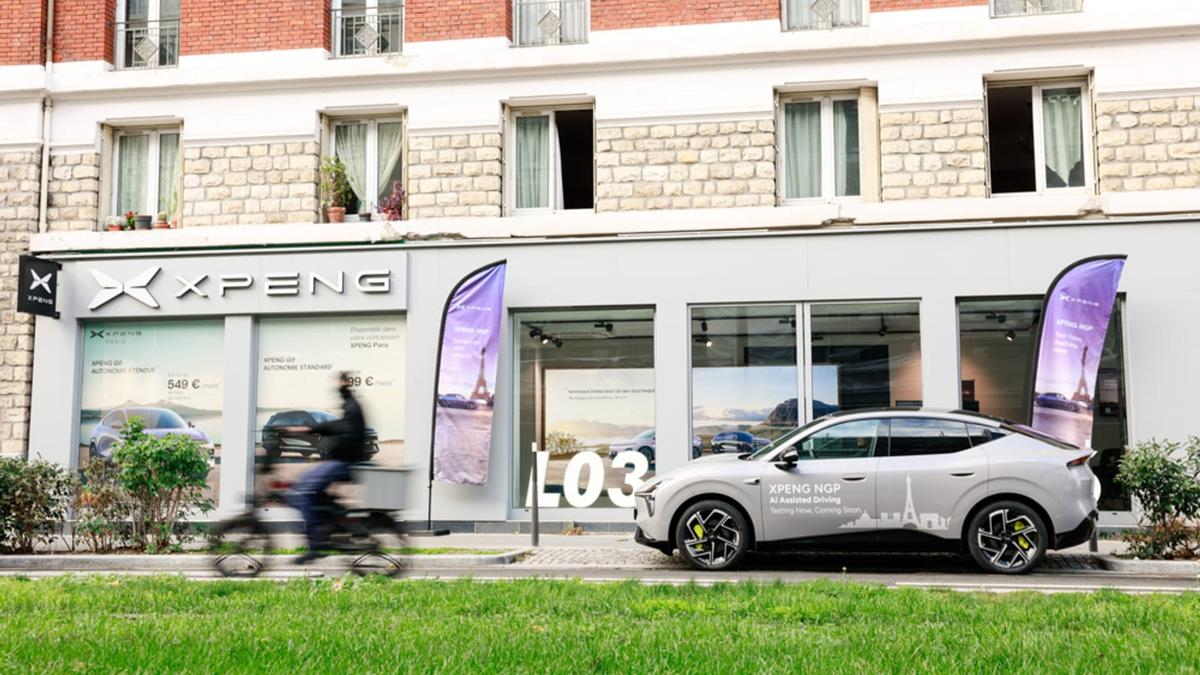
Here the story gets a local twist. While Germany debates leaning on XPeng, in Israel XPeng has long been bigger than all of the Volkswagen Group's electric brands combined.
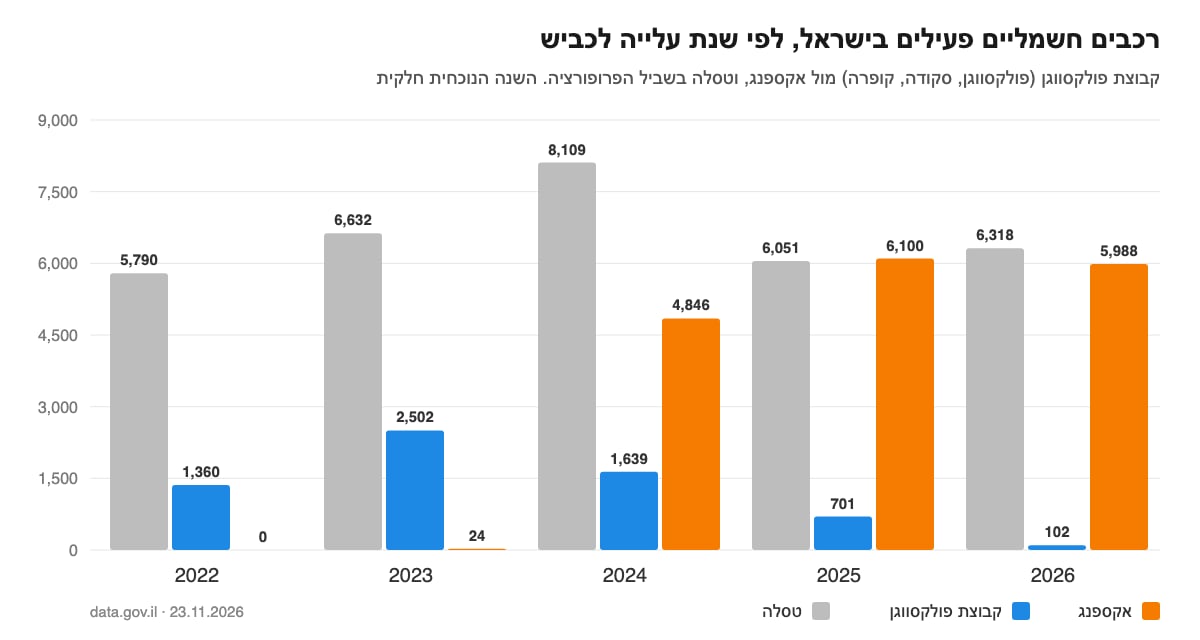
The blue bars tell the story. In 2023, 2,502 of the group's EVs went on the road, mostly Enyaqs and ID.4s. In 2026, so far, just 102. In orange, XPeng jumped from almost nothing to around 6,000 a year, the same pace as Tesla (grey). In total there are about 6,300 Volkswagen, Skoda and Cupra EVs registered today, against 16,958 XPengs.
That doesn't mean Volkswagen has vanished from Israel. The same registry shows more than 20,000 Skodas built in 2025, almost all of them petrol. The group simply sells mostly Octavias and Kamiqs here and has left the electric field to the Chinese brands and Tesla. The main reason, in my view, is price: the G6 Core starts at ₪204,990 on the importer's price list, and a rear-wheel-drive Model Y costs ₪245,534 on Tesla's site, both as of 23.11.2026. The group's European EVs, built on the MEB platform, struggled to compete with that gap.
So what do you do with this now
If you're considering an Enyaq or an ID.4 today, you're buying Volkswagen's current architecture, not CEA. Even if the proposal were approved tomorrow, the models getting it would reach Europe only in a few years, and Israel after that. There's no point waiting for it.
If you're considering an XPeng, don't pay a shekel extra for this headline. It doesn't change the price, the warranty or the waiting time at the service centre, which are all set by the importer. What it does add is a small point in favour of confidence in the technology itself. If a carmaker the size of Volkswagen is willing to bet on it, the odds of the software in your car being abandoned are lower.
The real question for an Israeli buyer stays the same: how fast updates actually arrive here. In Europe XPeng rolls out new software versions, and in Israel that also depends on the importer, as we wrote about the XOS 5.12 update. If you're weighing it against Tesla, which updates directly from the factory, the full comparison is in our G6 vs Model Y test.
Sources
- Manager Magazin's report, as summarised by CnEVPost (27.10.2026): cnevpost.com/2026/10/27/vw-considers-xpeng-co-developed-architecture-europ
- electrive on the proposal and expected savings (27.10.2026): electrive.com/2026/10/27/vw-could-bring-chinese-tech-to-europe-amid-cost-saving-pressures
- electrive on the electric Golf as a Rivian project (2.12.2024): electrive.com/2024/12/02/golf-to-become-the-first-vw-with-rivian-technology
- Motor1 on CEA in South America and South Africa, citing Reuters (30.10.2026): motor1.com/news/813818/volkswagen-taking-china-tech-global
- Volkswagen Group press release on CEA (17.4.2024, checked 23.11.2026): volkswagen-group.com/en/articles/smart-vehicles-at-China-speed-volkswagen-develops-high-performance-ee-architecture-for-electric-vehicles-in-china-with-xpeng-18335
- CarNewsChina on CEA entering production (29.1.2026): carnewschina.com/2026/01/29/volkswagen-starts-production-of-xpeng-co-developed-cea-architecture-five-new-models-due-in-2026
- electrive on the extension to petrol and plug-in models (15.8.2025): electrive.com/2025/08/15/vw-and-xpeng-expand-cooperation-once-again-now-into-ice-territory
- Ministry of Transport private and commercial vehicle registry, computed 23.11.2026: data.gov.il/he/datasets/ministry_of_transport/private-and-commercial-vehicles
- XPeng Israel price list (23.11.2026): heyxpeng.co.il/pricing ; Model Y price on Tesla Israel's configurator (23.11.2026): tesla.com/he_il
- Representative exchange rates, Bank of Israel (20.11.2026)